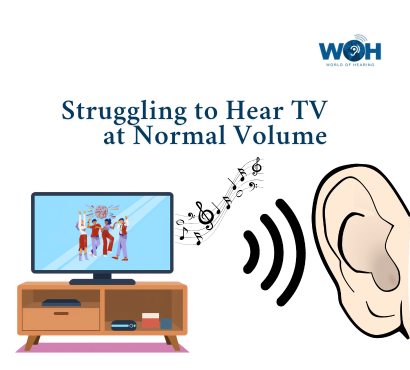
Television is part of daily life in most households. Whether it is news, entertainment, or conversations in family time, clear hearing helps people stay connected and engaged. But when you start struggling to hear TV at normal volume, it may not just be a minor inconvenience—it can be an early sign of hearing changes.
Many individuals first notice hearing difficulty in simple situations like watching television, talking on phone calls, or following group conversations. Because these changes develop slowly, they are often ignored or adjusted silently.
Over time, this can lead to communication gaps, frustration, and reduced confidence in social situations.
Understanding early hearing loss signs can help you take timely action and prevent further communication difficulties.
Why TV Hearing Difficulty Happens
Struggling to hear TV at normal volume can occur due to multiple reasons. It is not always related to ageing alone.
Some common causes include:
- Age-related hearing changes
- Long-term exposure to loud noise
- Earwax blockage
- Early sensorineural hearing loss
- Inner ear or nerve-related changes
- Temporary ear infections
In many cases, the issue begins gradually, making it easy to adapt without realising the change in hearing ability.
Early Signs That Should Not Be Ignored
Difficulty hearing television is often one of the first noticeable signs of hearing decline.
Other early symptoms include:
- Frequently increasing TV volume
- Asking others “what did they say?” often
- Missing dialogue in movies or shows
- Feeling that speech sounds unclear or muffled
- Difficulty understanding soft voices
- Struggling in noisy environments
These signs may appear mild initially but often progress over time.
Why TV Dialogue Becomes Difficult to Understand
Many people assume the issue is with the TV itself, but often it is related to speech clarity perception.
This happens because:
- High-frequency sounds become harder to hear
- Consonants in speech (like S, T, F) become unclear
- Background music or noise interferes with dialogue
- Brain processing of sound becomes less efficient
As a result, speech may sound like noise rather than clear words.
Relationship Between TV Volume and Hearing Loss
Increasing TV volume frequently is one of the most common early indicators of hearing difficulty.
You may notice:
- Others say TV is too loud
- You still feel dialogues are unclear
- You rely on subtitles more often
- You prefer watching TV in silence or isolation
This adjustment often happens gradually and unnoticed.
When Hearing Changes Start Affecting Daily Life
Hearing issues do not remain limited to TV alone.
Over time, they may affect:
- Phone conversations
- Family discussions
- Workplace communication
- Social gatherings
- Outdoor conversations
This can gradually lead to communication fatigue and reduced confidence.
Emotional Impact of Hearing Difficulty
Struggling to hear clearly can affect emotional wellbeing.
Some common experiences include:
- Frustration during conversations
- Feeling left out in group discussions
- Reduced social participation
- Mental tiredness after listening
- Avoiding communication situations
These emotional changes are often overlooked but are important warning signs.
Why Early Hearing Evaluation Matters
Early detection of hearing changes helps in better management.
A hearing evaluation can identify:
- Degree of hearing loss
- Type of hearing difficulty
- Speech understanding ability
- Ear health condition
- Suitable hearing solutions
Timely testing can prevent further communication decline.
Common Misconceptions About TV Hearing Problems
“It’s just the TV settings”
While TV settings can affect sound, consistent difficulty hearing speech often indicates hearing-related changes.
“Only elderly people face this issue”
Hearing loss can affect adults of different age groups due to noise exposure or medical conditions.
“It will improve on its own”
Most progressive hearing changes do not improve without proper evaluation.
Lifestyle Factors That May Affect Hearing
Certain daily habits may contribute to hearing decline over time:
- Long exposure to loud music or headphones
- Working in noisy environments
- Poor ear hygiene practices
- Untreated ear infections
- Smoking or chronic health conditions
Protecting hearing early is important for long-term communication health.
When You Should Seek Help
You should consider a hearing check if:
- TV volume is consistently increasing
- Conversations feel unclear
- You struggle in noisy environments
- People complain you mishear often
- You feel socially withdrawn due to hearing issues
Early consultation helps in timely management.
Importance of Professional Hearing Assessment
A hearing test is simple, painless, and highly informative.
It helps determine:
- Hearing sensitivity levels
- Speech recognition ability
- Ear canal condition
- Need for hearing support devices
Many individuals benefit from consulting an Audiologist in Pune for structured hearing evaluation and personalised guidance.
Modern Hearing Care Approach
Today’s hearing care focuses not only on devices but also on improving communication quality and lifestyle comfort.
People often explore services like a Hearing Aid Clinic in Pune to understand digital hearing solutions, hearing evaluation, and modern hearing support options.
How Hearing Aids Can Help in TV Listening
Modern hearing aids are designed to improve speech clarity rather than just increase volume.
They help by:
- Enhancing dialogue clarity
- Reducing background noise
- Improving speech focus
- Adjusting sound automatically
This makes TV watching more natural and comfortable.
Prevention and Hearing Care Tips
While not all hearing loss can be prevented, some habits may help:
- Keep TV volume at moderate levels
- Avoid prolonged loud noise exposure
- Take listening breaks during headphone use
- Maintain regular ear checkups
- Seek early evaluation when symptoms appear
Small changes can support long-term hearing health.
Why Ignoring Early Signs Can Be Risky
Delaying hearing care may lead to:
- Increased communication difficulty
- Social withdrawal
- Reduced confidence
- Mental fatigue
- Poor quality of life
Early action is always more effective than late correction.
Conclusion
Struggling to hear TV at normal volume is often more than just a minor inconvenience—it can be an early sign of hearing changes. When combined with other symptoms like unclear speech, frequent repetition, or difficulty in noisy environments, it becomes important to take it seriously.
Timely hearing evaluation, proper diagnosis, and professional guidance can help improve communication clarity and prevent further decline.
Instead of adjusting silently, seeking early support can make everyday listening more comfortable and confident.
FAQs
1. Is increasing TV volume a sign of hearing loss?
Yes, frequently increasing TV volume can be an early indicator of hearing difficulty.
2. Can hearing loss affect understanding TV dialogue?
Yes, especially speech clarity and high-frequency sounds can become difficult to understand.
3. When should I get a hearing test?
If TV listening or conversations feel unclear regularly, a hearing evaluation is recommended.